

The Brownie Story (Lie)

Updated: May 4
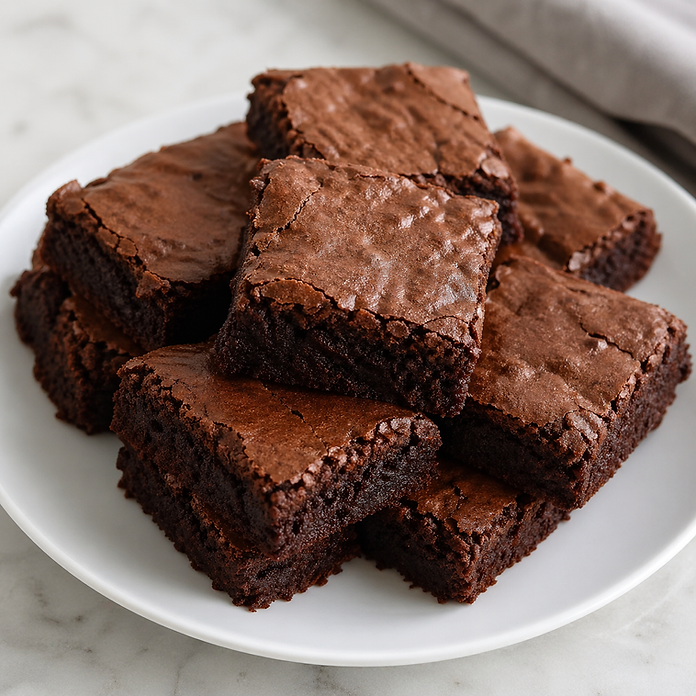
Image generated by ChatGPT.
My daughter knows I like brownies. She likes to make them for me because she knows I like them and it is her way to tell me she loves me. A few nights ago, she made brownies for me after dinner. That night I ate two brownies. The next day I had another one or two brownies. And the rest of the week continued like that until I had finished all of them. I felt terrible about myself and was feeling depressed because I can’t eat what I want and still fit into my clothes.
In the book, The Way of Integrity, Martha Beck says that feelings such as sadness, resentment, and anger can indicate that we have veered out of alignment with our core self and core values. When I noticed those feelings in myself, I paused to examine where I had become out of alignment with myself. It didn’t take long to uncover what I was believing when I veered off course. My internal monologue sounded something like this:
Oh – my daughter made me brownies. That’s so sweet of her to think of me and want to do something nice for me. Now I have to eat the brownies to show her that I appreciate her thinking of me. I can’t let the brownies sit uneaten because she might think I don’t appreciate the brownies she made for me as well as the time and thought she put into them for me. (Note that these series of thoughts fall into trying to control how other people think or feel – a topic for another time.)
And the final thoughts that resulted in my eating all of the brownies - I can’t let the brownies go to waste. It is wasteful to let food go uneaten.
The betrayal. An Innocent Mistake
I eat the brownies because I want my daughter to feel happy. I also eat the brownies because they taste good. I don’t really want the brownies because I know they hurt my body, but I eat them anyway.
The next night I feel I deserve to eat a brownie as a reward for eating well the rest of the day or because I have been exercising self-restraint around other tempting treats or desires, such as shopping for non-food treats.
So I eat another brownie or two.
Then I beat myself up for not practicing more self-restraint. A hour or two later, I eat another brownie or a piece of chocolate because why not? I’ve already betrayed myself by eating brownies, so why not again? It becomes a spiral out of integrity or alignment with my true self.
Martha Beck notes that when we veer off course, it is because we are believing lies that we tell ourselves. These little lies are generally innocent mistakes, ones of which we are not consciously aware and before we know if it, we find ourselves way off course from where we wanted to be.
Looking at back at this example with the brownies, I first veered out of integrity when I ate the brownies when I didn’t want them. I further went astray when I thought that I needed to keep eating them to demonstrate my love and appreciation to my daughter.
Rather than believe the thought “If I don’t eat the brownies my daughter will think I don’t appreciate her,” I could have believed a different thought that would have created a different outcome. For example, I could have had the thought, “My daughter made brownies to show me she loves me. I have options for how to take care of myself and let her know that I appreciate her demonstration of love.”
If I had believed that thought, I might have decided to eat one brownie and put the rest in the freezer to enjoy at a later date.
A second option, I could have thanked my daughter for her thoughtfulness and told her that I love her. I might have gently explained that because I love brownies so much, they are hard to resist and that it would be better for me in the future if she would instead write me a note or send me a text to tell me she loves me.
There are many alternative thoughts that could have resulted in the outcome I wanted for myself. However, these are the ones that felt most true for me. Now that I knew where I had veered off course, I could be on the lookout for similar innocent mistakes in the future.
The Way of Integrity
Ultimately, lying to ourselves, no matter how big or small, creates our own personal internal suffering. The only way out of our internal suffering is to get really honest with ourselves and identify where we went out of integrity, no matter how innocently. In my experience, most of the lies we tell ourselves are often out of a sense of protecting ourselves or protecting others. Most lies are subconscious; innocent mistakes. We don’t even realize that we believe the stories we tell ourselves are the TRUTH.
The first step to find your way back into integrity is to notice when you feel bad, angry, sad, scared, disappointed, or resentful. Next, find out what thoughts you are believing. Once you have identified the thought or cluster of thoughts that are creating the pain, you get to decide if you actually believe the thought(s). And, you get to choose a new thought that gets the result you actually want for yourself.
That’s the path back to integrity.
And that’s where an empowered life begins.


Comments